Phil’s Creed That Adversity Strengthens People
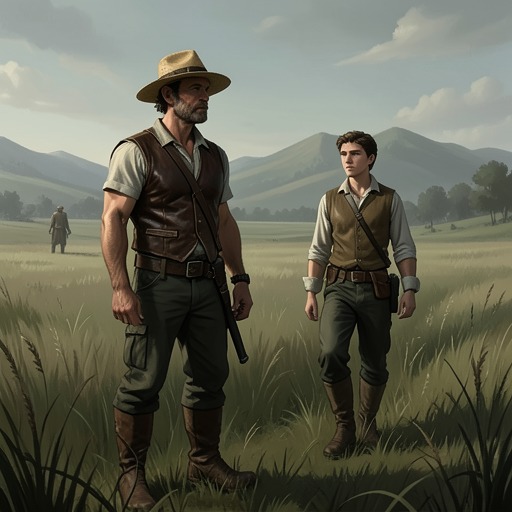
The Power of the Dog (Thomas Savage Edition)Phil’s Creed That Adversity Strengthens People is Phil Burbank’s belief that a person benefits from having difficulties to overcome. He presents adversity not simply as suffering but as a test that can cultivate courage, patience, skill, and sharper observation. In explaining the creed to Peter Gordon, Phil joins it to memories of Bronco Henry and to a contrast with Peter’s father, John Gordon, whose teaching, as Peter recalls it, centered on removing obstacles.
The Creed and Its Terms
Phil’s principle is that a person needs opposition. He treats the odds against someone as a possible source of development: difficulties make room for the courage and patience required to learn. The creed is not an instruction to welcome every hardship or a promise that adversity automatically improves anyone. Phil’s own example makes effort essential. He credits Bronco Henry’s progress to learning over time, and presents patience as part of that process rather than a substitute for it.
His account also distinguishes patience from impatience by emphasizing their unequal costs. A person trying to master a skill cannot force learning simply by wanting immediate success. Phil’s formulation values persistence: facing difficulty matters because it creates the circumstances in which sustained effort can produce ability. The idea of being tested thus has a practical meaning in his speech, grounded in riding and roping rather than stated only as an abstract maxim.
Bronco Henry as the Example
Phil explains the creed through Bronco Henry, who, he says, arrived in the region knowing little about riding and roping. Phil deliberately compares Bronco’s former ignorance with Peter’s, then immediately distinguishes Peter from that earlier state: Peter has recently become capable of sitting well on a horse. The comparison makes improvement visible. Starting with little knowledge does not, in Phil’s account, set a permanent limit; learning changes what a person can do.
Bronco Henry is more than an example of eventual competence. Phil recalls him as a teacher who showed Phil how to learn: courage and patience mattered, but so did using one’s eyes. Phil directs Peter’s attention to a hillside and asks him to consider what Bronco might have seen there. The passage does not disclose Bronco’s answer or specify what he perceived. Instead, it makes observation itself part of the lesson: the same landscape may yield different understanding to someone trained to look closely.
Phil and Peter’s Different Accounts of Obstacles
Peter responds to Phil’s emphasis on opposition by recalling his father’s teaching about obstacles and the need to remove them. Their exchange sets two approaches beside one another. John Gordon’s principle, as Peter presents it, treats obstacles as impediments to be cleared; Phil recasts them as odds that may help develop a person. The distinction does not establish that Peter rejects his father’s teaching, nor does the conversation resolve which approach is right. It shows Phil offering Peter a different way to understand difficulty.
Phil connects that alternative directly to Peter’s circumstances, telling him that he has obstacles of his own. The remark gives the philosophy a personal address: Peter is not merely hearing a story about Bronco Henry but being invited to see his own challenges through Phil’s framework. Phil’s acknowledgment of Peter’s improving horsemanship makes the invitation encouraging, even as the creed assumes that a person must face opposition rather than simply be spared it.
Teaching, Attention, and Limits
The conversation follows Phil’s unsuccessful attempt to recover a feeling of nostalgia through the rabbit incident. He turns instead to speaking about Bronco Henry, and the remembered teacher provides a more substantial route into the past: Phil can describe what Bronco taught him and pass that lesson on to Peter. The shift places the creed within an act of instruction, not just reminiscence. Its lesson includes both persistence in a difficult craft and the capacity to notice what another observer might miss.
Phil sometimes slips into an Irish brogue while addressing Peter, explaining that the Irish amuse him for their pluck and roguishness. That manner of speech accompanies his appeal to courage, but the creed’s central emphasis remains his account of Bronco Henry and the skills learned through practice. The scene leaves the hillside’s meaning unstated and the difference between Phil’s and John Gordon’s teachings unresolved. What it establishes is Phil’s attempt to make adversity intelligible to Peter as something that can be met with patience, courage, and trained attention.